.svg)
Rescue coordination and early warning infrastructure for active conflict zones
A mobile command platform and AI-powered early warning system built for the White Helmets. Designed to function under the connectivity and operational constraints of northwest Syria.
THE CLIENT
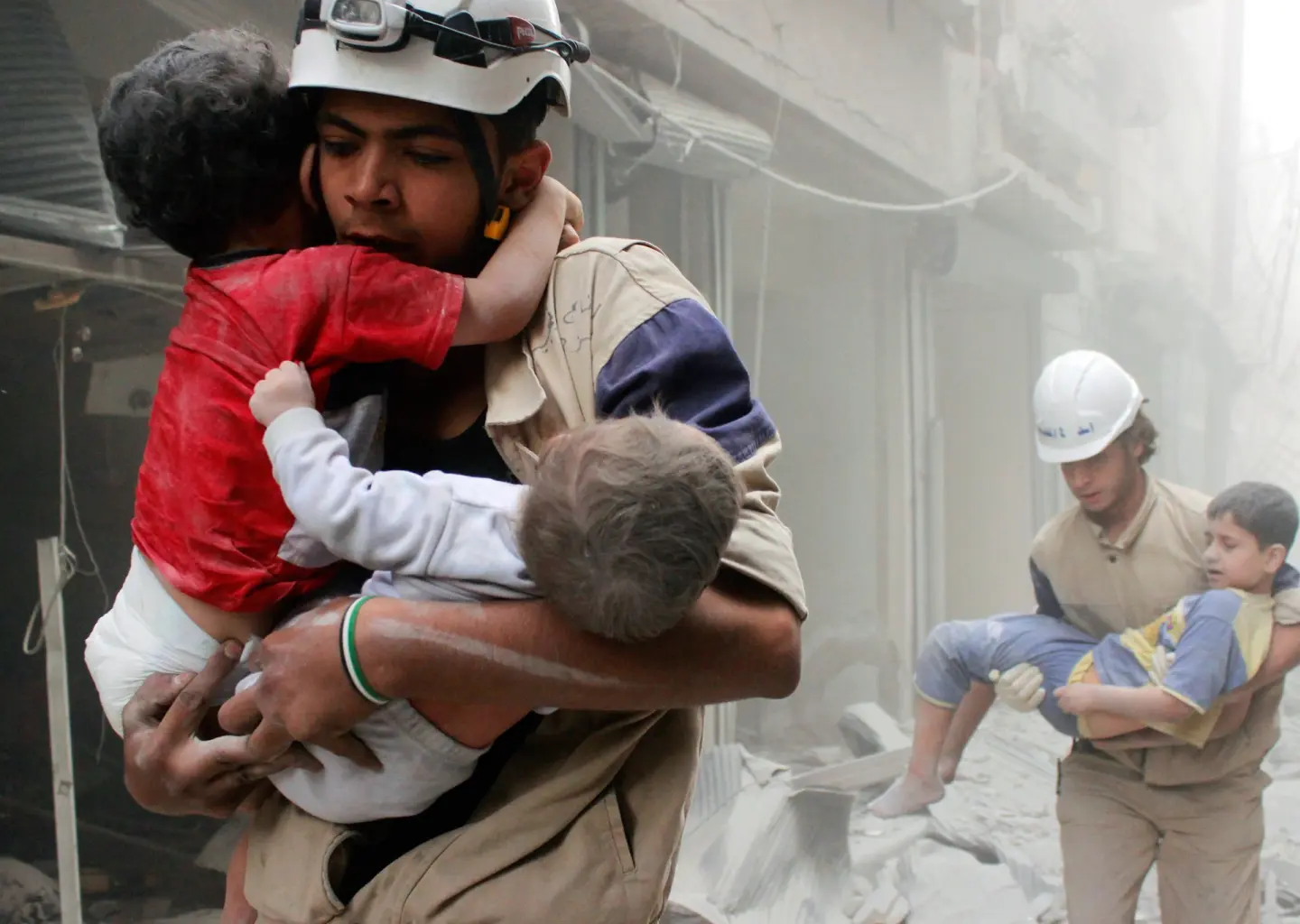
The White Helmets (formally Syria Civil Defense) is a volunteer search and rescue organisation operating in active conflict zones across northwest Syria. Since founding, the organisation has been credited with saving over 120,000 lives. It operates in conditions that are categorically different from those assumed by commercially developed emergency response tools: intermittent connectivity, active threat environments, dispersed teams, and operational pressures where system failure has direct life-safety consequences. Standard platforms do not hold up here.
THE CHALLENGE
The organisation's operational structure at the time of engagement relied on messaging applications and radio for field coordination. This created three compounding gaps: there was no centralized command layer through which incident data and resource status could be managed, no early warning capability to identify escalating threats before they became active incidents requiring response, and no unified situational picture across field teams. Coordination was reactive and fragmented in an environment that demanded the opposite.
WHAT WE BUILT
Primero Group built two interconnected systems. The mobile coordination platform replaced fragmented voice communication with structured incident reporting and real-time dispatch, giving team leaders a single operational view: active incidents, team locations, and available resources together.
The AI-powered early warning layer was engineered to identify patterns in threat data and surface escalating risks before they required emergency response. Both systems were designed and tested against the specific constraints of conflict-zone operation — reliable connectivity cannot be assumed, and failure tolerance is near zero.
WHAT IT SHOWS
This engagement sits at the far end of the capability spectrum the Group operates across. It demonstrates the ability to build technically complex, AI-augmented systems under the most demanding operational and ethical constraints, where the standard software development framework of iteration and acceptable failure rate does not apply. It is one of the clearest indicators of the engineering depth the Group can deploy.